


- Medical Livestream
- Live Broadcast
- Healthcare
A Live Bronchoscopy Streamed to a Global Medical Audience
University Hospital Zurich had a new way to reach lung tumours without cutting. EVERYWOW streamed the medical procedure live, to specialists around the world.
At a Glance
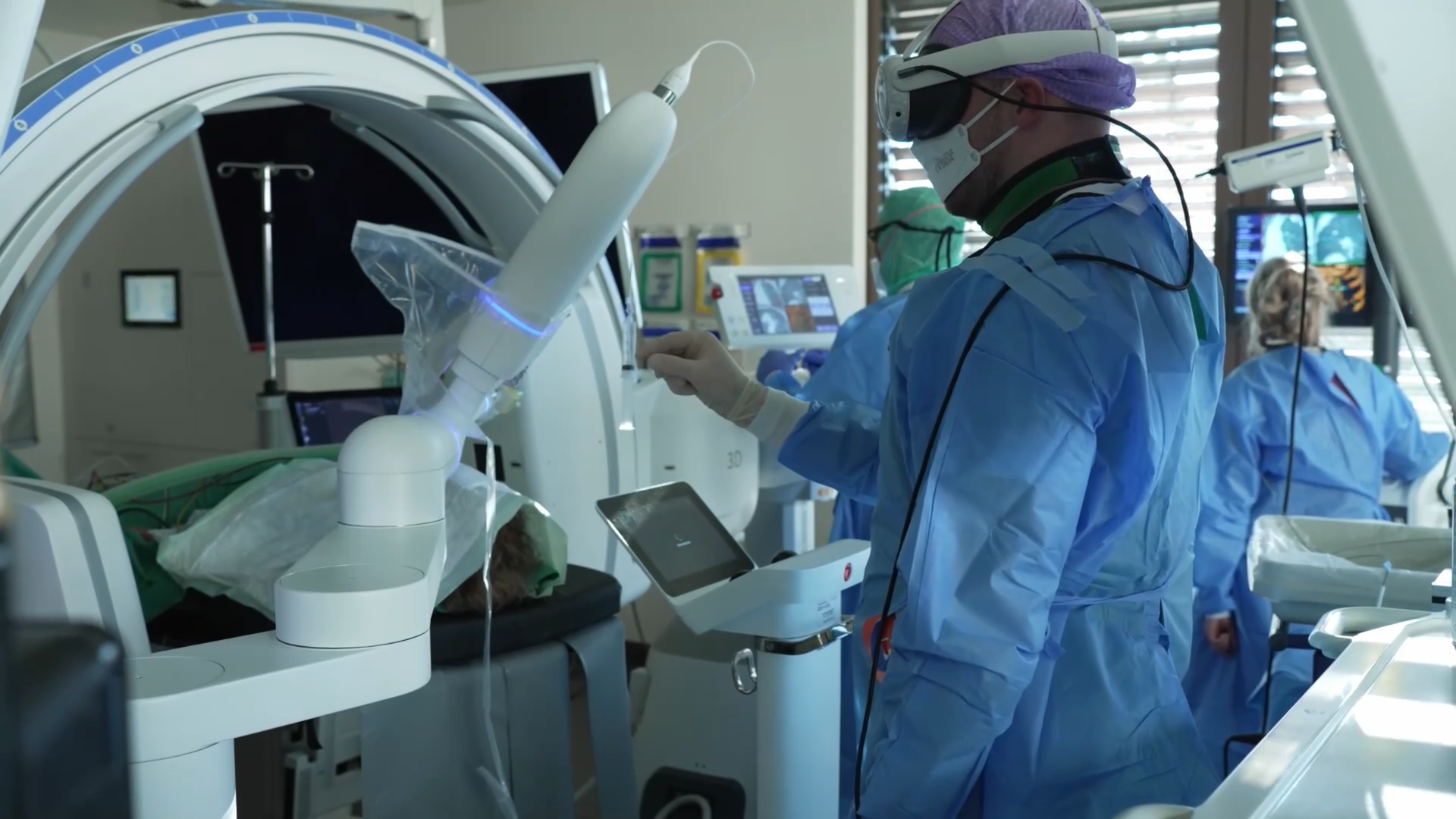
University Hospital Zurich performed a VR- and robotic-assisted bronchoscopy live, for the Pulmonology On Air Global Event 2024. EVERYWOW ran the broadcast from inside the procedure room at the hospital.
1,000+
specialists watching live
5
live feeds combined: 2 cameras, 2 medical devices, 1 VR headset
1
live broadcast, no second take
University Hospital Zurich
One of the first centres in Europe for robotic-assisted bronchoscopy
The Procedure
A VR- and robotic-assisted bronchoscopy, navigated through a headset
Audience
Interventional pulmonologists and thoracic specialists worldwide
The Challenge They Came With
University Hospital Zurich wanted to show a new technique to its field. So it streamed a live VR- and robotic-assisted bronchoscopy to the Pulmonology On Air Global Event 2024.
- The audience needed the physician’s view through the VR headset, the medical-device screens, and the room itself, all at once, not a single camera.
- The broadcast could add nothing to the clinical risk and could not slow the medical team by a second.
- Specialists were watching from around the world, and expected to follow the technique clearly enough to learn from it.
- It had to look and sound like broadcast, not like a camera propped in the corner of the room.
Target Group
The livestream had to reach the specialists who would judge the technique and adopt it, wherever they were watching from.
- Interventional pulmonologists
- Thoracic surgeons
- Physicians training on robotic-assisted procedures
- Medical-technology and clinical-innovation teams
- Conference delegates following remotely
- A global professional audience, watching live
Who Was on Camera
In the room, University Hospital Zurich’s interventional team performed the procedure, led by Dr. Gaisl and Dr. Steinack: the physician navigating through the VR headset, the clinical staff around the table.
Operating live in front of a global audience of peers is its own kind of pressure. The medical team’s whole attention had to stay on the patient, not the broadcast. So EVERYWOW kept the production out of the way: crew and cameras stayed clear of the sterile field and the clinical workflow. What reached the audience was the procedure exactly as it happened.
How It Ran
EVERYWOW designed and ran the entire broadcast. University Hospital Zurich ran the procedure. The medical team focused on the patient.
What University Hospital Zurich Did
- Performed the procedure and led the clinical work
- Gave access to the room and the clinical feeds
- Handled patient consent and clinical sign-off
What EVERYWOW Did
- The broadcast concept and run-of-show for the live procedure
- Two cameras placed to catch every critical angle without disruption
- Integration of the VR headset feed, sent wirelessly, with two medical-device feeds and the cameras into one live mix
- A two-way link to the remote conference, so the doctors could talk live with the hosts
- Live direction and vision mixing throughout the procedure
Before
Production Concept
We planned the live procedure as a broadcast before anyone went live.
The Feed Map
Which feeds mattered and where each one came from: the VR headset, the medical devices, and the two cameras.
The Room Plan
Where the two cameras sat to catch every critical angle while the room stayed clear for the medical team.
The Live Procedure
Recording & Production
Five live feeds cut into one clean broadcast, directed throughout, without a step into the sterile field.
One Clean Picture
The VR headset feed, the two medical-device feeds, and the two room cameras cut live, so the audience saw exactly what mattered, moment to moment.
Clear of the Field
Crew and cameras stayed out of the sterile field and the clinical workflow, so the medical team never had to work around us.
Delivery
Live to the World
The broadcast sent out to the conference in real time, held stable for the full procedure.
Two-Way, Live
The two doctors in the room could talk live with the conference hosts, who were in a studio far away. EVERYWOW built and held that two-way link for the full procedure.
On Set


The Hard Part
The room opened for a narrow window, built around the patient and the clinical schedule, not the broadcast. Everything had to be rigged, tested, and broadcast-ready inside that slot, in a working procedure room that could not be crowded, rearranged, or slowed.
Then it went live, once, while the medical team worked exactly as they always do.
- A tight setup window, one shot to get the room ready
- Cameras inside the sterile environment, clear of the team and the field
- A wireless feed from the VR headset to lock onto and hold, live
What Came Out of It
More than 1,000 specialists watched the procedure live, from around the world, and the picture was clear enough to teach from.
That put a new technique in front of the people who decide whether to adopt it, and it put University Hospital Zurich in front of its field as a centre others learn from.
Want to work together?


Plan Your Next Live Broadcast
Have a procedure or a live moment that has to reach people who can’t be in the room? Tell us what you’re planning, and we’ll come back with a clear next step.