A strong event highlight film feels inevitable when you watch it, but it is built through selection. The editor and production team decide which moments define the event, what emotional arc the audience should feel, and how much substance needs to sit underneath the visual energy.
That is why structure matters. A highlight film is not a random montage of applause, stage lights, and fast cuts. It needs a recognisable beginning, a clear centre of gravity, and an ending that leaves the viewer with a reason to care about the event or the brand behind it.
Table of Contents
The basics of an event highlight film
An event highlight film is a short, selective recap that captures the event’s most memorable signals rather than attempting full coverage. It is designed to create a sharp impression, not to serve as an archive.
That makes judgement more important than volume. The team needs to know what the event was really about, otherwise the final film may contain plenty of activity but very little meaning.
Defining an event highlight film
A highlight film usually compresses atmosphere, people, programme, and emotional peaks into a concise narrative. It should help the viewer understand both what happened and why the event mattered.
This is what separates it from a raw recap. The film does not merely show that the event took place. It shapes what the audience remembers about it.
The purpose of an event highlight film
The purpose is often promotional, but not only promotional. A highlight film can support event marketing, sponsor reporting, internal communication, community building, and sales follow-up.
Because it often has several jobs, the structure needs discipline. A film that tries to serve every stakeholder equally often loses force.
Key elements in a highlight film
Most effective highlight films share a recognisable progression. They orient the viewer quickly, develop momentum, and end with a sense of conclusion rather than just stopping when the music ends.
This does not require a rigid formula, but it does require intention. Structure is what turns footage into a communication asset.
The opening scene
The opening needs to establish tone fast. A strong opening shot, line, or sound cue can tell viewers whether the event feels ambitious, intimate, high-energy, or highly curated.
If the film opens slowly or generically, the audience may never fully lean in. The first seconds carry disproportionate weight.
The main event
The centre section should carry the event’s real value. That may be keynote moments, audience interaction, product reveals, networking energy, or visible community signals, depending on the event.
A good middle does not just accumulate clips. It builds a case for why the event was worth attention.
The closing scene
The ending should leave a final impression, not simply fade out. It can suggest momentum, satisfaction, anticipation for the next edition, or a clear brand association.
A weak ending makes the whole film feel unfinished. A strong ending clarifies what the viewer is meant to carry away.
The art of storytelling in highlight films
Storytelling is what keeps a highlight film from becoming an attractive blur. Even when the runtime is short, the viewer still needs a sense of movement, emphasis, and emotional direction.
That does not mean inventing drama that was not there. It means selecting and ordering the material so the event’s meaning becomes easier to feel.
Building a narrative
Narrative can be built through sequence, contrast, escalation, or repetition. For example, a film may move from arrival to immersion to payoff, or from problem framing to insight to momentum.
The exact pattern depends on the event, but some form of progression is almost always helpful.
Capturing emotion and excitement
Emotion gives the film memorability. Excitement on stage, concentration in the audience, relief, surprise, recognition, or collective energy all help the viewer feel the event rather than merely observe it.
The strongest films balance this emotion with proof. Energy alone is rarely enough for corporate or B2B events.
Technical aspects of event highlight films
Technical choices shape how the event feels in the final cut. Camera movement, shot variety, audio texture, pacing, and colour treatment all influence how viewers interpret the experience.
Good technique is not about showing off. It is about making the event legible, dynamic, and credible.
Camera techniques
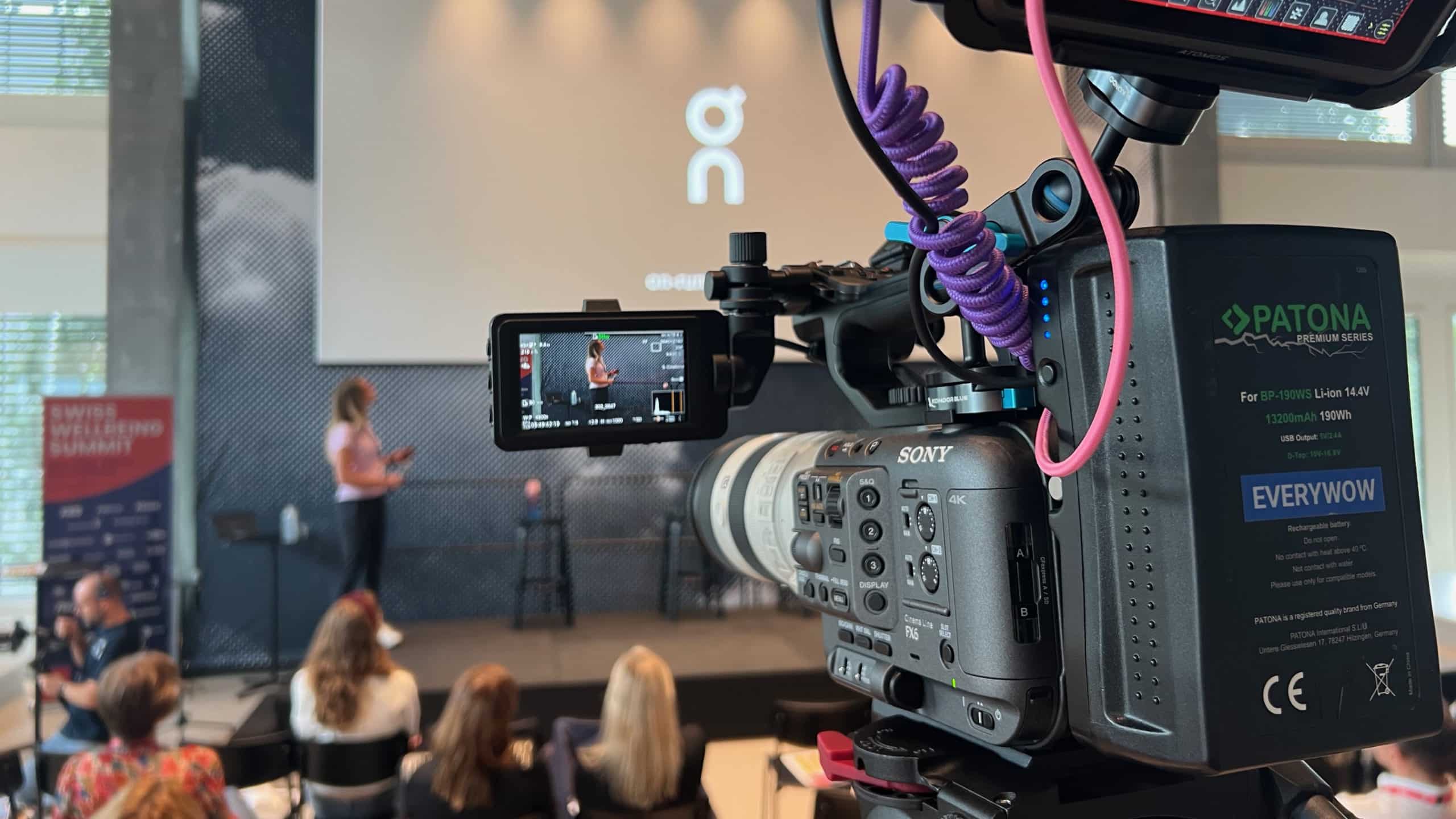
Variety matters: wides for scale, mediums for context, close-ups for emotion, and detail shots for texture. Movement can add energy, but only if it supports the moment rather than distracting from it.
Coverage should also anticipate the edit. If the team only collects stage shots, the final film will struggle to feel immersive.
Sound design
Sound is often what gives a highlight film depth. Crowd reactions, room tone, applause, speaker fragments, and music all help create the event’s sense of presence.
If the sound design is too flat or generic, even strong visuals can feel oddly distant.
Editing and post-production
Post-production is where structure becomes visible. The editor decides rhythm, emphasis, transitions, and how much information each beat should carry.
Good editing also knows when to simplify. Not every strong shot belongs in the final piece.
The role of a highlight film in event promotion
A highlight film works as future-facing proof. It shows prospective attendees, partners, and sponsors what kind of event this is and what standard they can expect.
That makes the film a marketing tool, but also a trust tool. It tells the market whether the organiser can create energy, relevance, and a coherent experience.
Marketing benefits
For promotion, a highlight film can extend event visibility well beyond the day itself. It gives the team an asset for social distribution, follow-up pages, sales materials, sponsor recaps, and future registrations.
The more clearly the film reflects the event’s distinctive value, the more useful it becomes in marketing.
Engaging the audience
For attendees, the film helps reinforce memory and satisfaction. For absentees, it can create interest and future intent. In both cases, the structure of the film determines whether the response stays superficial or becomes meaningful.
That is the real reason structure matters. It shapes what the audience takes forward.
FAQ
How long should an event highlight film be?
Often between 60 seconds and 3 minutes for broad use, though some events benefit from a slightly longer version if the audience expects more context.
What is the most important part of the structure?
Usually the opening and the ending. The opening wins attention, and the ending decides what impression remains.
Do highlight films need interviews or speaker audio?
Not always, but selected voice or live sound can add meaning and credibility, especially in corporate contexts.
How much footage variety is enough?
Enough to show scale, people, detail, and emotional response. A film built only from stage footage often feels flat.
What is the most common structural mistake?
Confusing activity with story. A busy montage can look energetic while still failing to explain why the event mattered.