
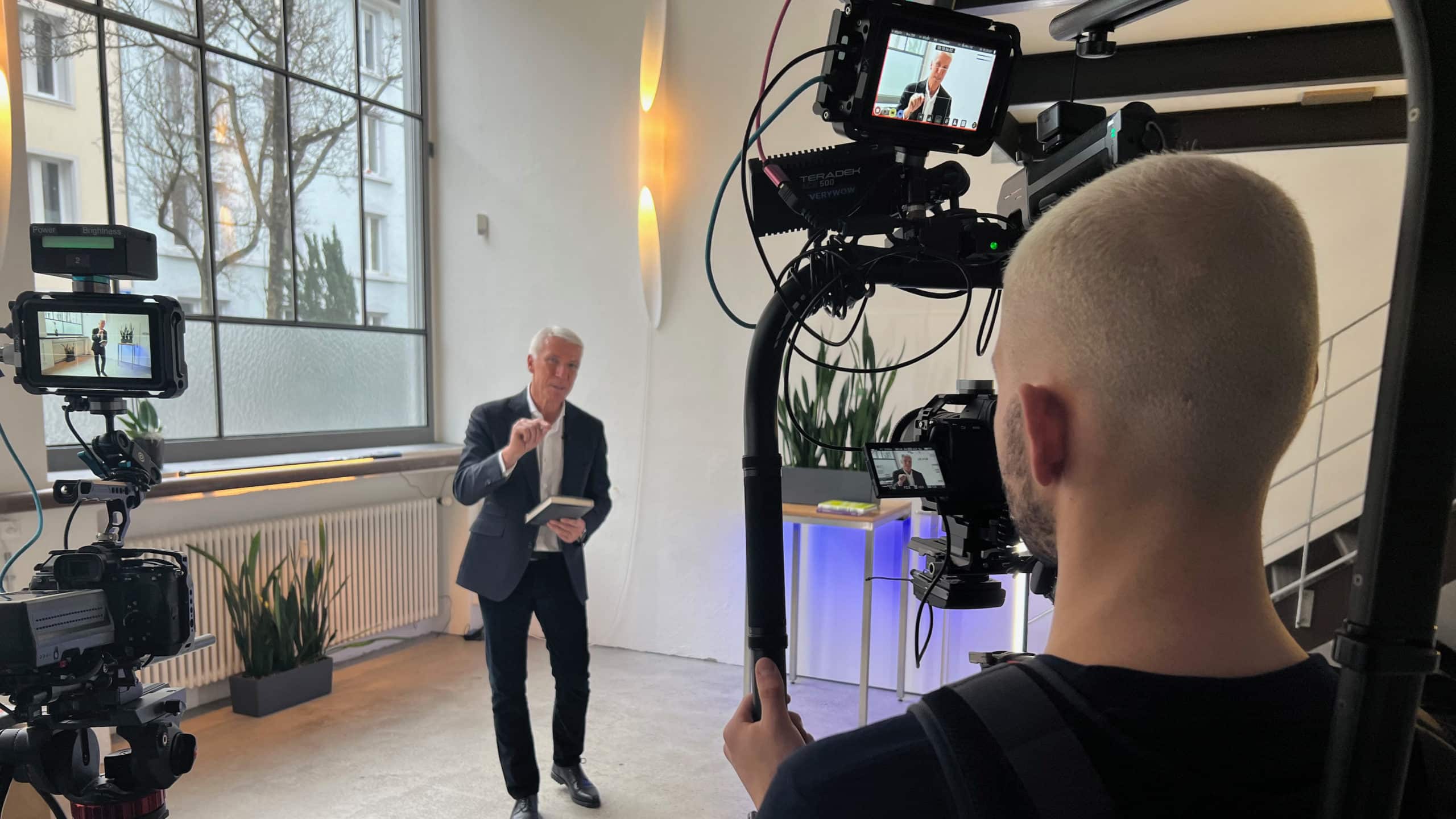
The best video production company is not the one with the prettiest showreel. It is the one that can understand your business problem, translate it into a strong production plan, and deliver reliably under real constraints.
Showreels matter, but they are only one signal. The real test is whether the company can think clearly with you about audience, message, process, budget, and the level of care the project actually needs.
Table of Contents
1. Review experience and portfolio
Start with the obvious evidence. Has the company produced work that feels credible, well executed, and relevant to the level of communication you need? A portfolio should show more than visual taste. It should show whether the team can handle different formats, real clients, and serious production conditions.
Look closely at the kind of work they repeat. Repetition can mean strength, but it can also reveal limits.
2. Consider the niche
Not every production company is built for the same type of work. Some are excellent at brand films, some at events, some at product explainers, and some at executive communication. The more your format depends on industry sensitivity or stakeholder complexity, the more niche fit starts to matter.
A company does not need to have worked only in your sector, but it should understand the kind of audience judgement your project will face.
3. Search for a company with integrity
Integrity shows up in how a production company scopes work, discusses budget, handles uncertainty, and says no when an idea is unlikely to work. You want a partner that is commercially realistic without becoming slippery.
If a team oversells every possibility, hides trade-offs, or seems vague about ownership and revisions, expect trouble later.
4. Evaluate their company culture
Production work is collaborative under pressure. Culture matters because it shapes how the team behaves when the schedule tightens, feedback gets sharper, or the client side becomes more complex.
Look for a company whose working style matches yours. Calm, organised teams usually make the process easier for internal stakeholders who are already busy enough.
5. Check their marketing savvy
A production company does not need to be your full marketing agency. It should still understand message hierarchy, audience attention, calls to action, and the role the video plays inside a broader communication plan.
Without that thinking, you may receive a polished film that looks expensive but does not move anything important.
6. Consider their range of services
Be clear about what you actually need. Some projects require strategy, scripting, casting, subtitles, multiple edits, localisation, or motion graphics. Others need a lean crew and fast execution.
The right partner is not the one that offers everything. It is the one that can cover the services your project depends on without creating unnecessary complexity.
7. Look for quality, style, budget, timeline, and customer service
These factors belong together. Quality without process discipline can destroy a timeline. Attractive pricing without serious project management can cost more later. A strong visual style is only useful if the team can deliver it consistently within the agreed budget.
Customer service matters because video projects involve many small decisions. If communication already feels slow, unclear, or defensive during the sales phase, it rarely improves under production pressure.
FAQ
How many companies should I compare before choosing one?
Often two to four serious conversations are enough if the brief is clear and the evaluation criteria are disciplined.
Is a strong showreel enough reason to hire a production company?
No. A showreel can open the conversation, but process quality, strategic thinking, and reliability decide the project outcome.
Should I prioritise sector experience?
Prioritise relevant judgement. Direct sector work helps, but understanding your audience and constraints matters more than labels alone.
What is a warning sign during the pitch phase?
Vague scope, unclear ownership, unrealistic promises, and a reluctance to discuss trade-offs are all warning signs.
Why does customer service matter so much in production?
Because projects involve many small approvals and decisions. Clear communication reduces friction and expensive mistakes.