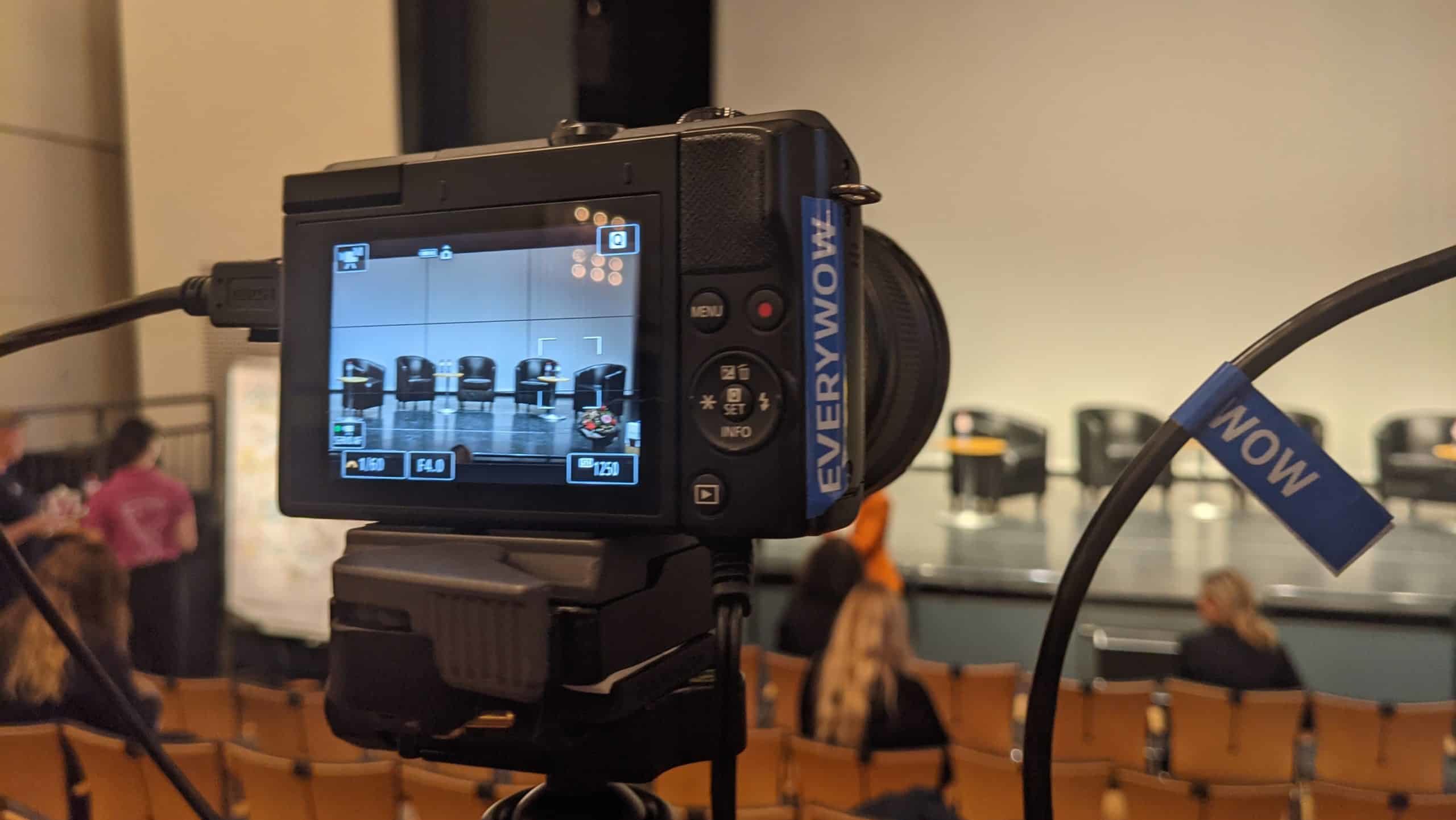

Hybrid events work when both audiences matter. The room and the remote viewers need their own experience, their own access to information, and a format designed for participation on both sides.
A hybrid event is more than streaming a stage camera to the internet. Done well, it extends reach, includes people who cannot attend, and keeps the event useful after the day itself. These ideas show where the format can make practical sense.
Table of Contents
Hybrid live stream events: on-site and digital at the same time
A hybrid event combines a physical gathering with a meaningful digital layer. That can mean broadcasting an on-site event to remote viewers, bringing remote speakers or guests into the room, or designing participation so both audiences can ask questions, react, and follow the same core story.
The crucial point is that the online audience should not feel like a technical afterthought. They need clear sound, relevant camera work, and moments where they are actively included. If that is planned well, hybrid events can increase reach without diluting the event itself.
11 hybrid event ideas
Some formats benefit especially well from a hybrid setup because the digital extension is useful, not cosmetic.
1. Hybrid panels
Panels are a strong hybrid format because remote guests can join without travel and the online audience can submit questions in parallel. The key is active moderation so the remote side is not reduced to passive viewing.
2. Stream award ceremonies
Awards carry emotional weight and often matter to people who cannot be in the room. Hybrid production allows nominees, teams, or clients in other locations to join live and makes the recognition visible beyond the venue.
3. Diploma awards
Graduations and diploma ceremonies become more inclusive when families, alumni, and participants abroad can take part remotely. A hybrid setup also turns a one-off ceremony into a lasting record people can revisit later.
4. Conferences: analogue and digital
Conferences are often the clearest case for hybrid delivery. Some participants need networking and room energy on-site, while others only need access to the programme. Hybrid design lets both groups join without forcing one model on everyone.
5. General assemblies
Associations, parties, NGOs, and companies often struggle with attendance at formal assemblies. Hybrid access makes participation easier and can help members stay informed even when they cannot travel. If votes are involved, the process must of course be organised with care.
6. Press conferences
Press conferences already revolve around statements and questions, which makes them well suited to hybrid distribution. Clear audio, disciplined timing, and a system for handling questions from both the room and remote journalists are what make the format work.
7. Information events
Boards, clubs, schools, and project teams often need to explain decisions or updates to a broad group. A hybrid stream helps them reach people who care about the topic but cannot realistically attend in person.
8. Art: streaming of exhibitions, vernissage, book launch and reading
Art events usually rely on atmosphere, which means the digital version has to be curated rather than merely documented. A guided camera, short artist interventions, and clear editorial choices can make remote participation much more engaging than a static room feed.
9. Music: concerts, club evenings, dance events
Live music is strongest in the room, but a good hybrid stream can widen access and extend the lifespan of the performance. The production value matters here because sound, rhythm, and audience energy have to survive the translation to screen.
10. Weddings
Weddings are often hybrid for practical reasons rather than publicity. Friends and family abroad, older relatives, or guests with travel constraints can still witness the ceremony live without changing the intimacy of the event itself.
11. Live streaming funerals
Funerals require discretion, reliability, and respect. When remote attendance is needed, the hybrid setup should stay simple and unobtrusive so the technology supports the ceremony rather than becoming visible within it.
Many more live streaming ideas and more in our blog
Hybrid production is useful wherever the value of the event should extend beyond the people in one room. The right format depends less on trend language and more on audience, purpose, and how participation is meant to work. When those basics are clear, hybrid delivery becomes a practical tool rather than a compromise.
FAQ
What makes an event truly hybrid instead of simply streamed?
A hybrid event gives remote participants a real way to follow, react, and take part. A simple one-way stream is useful, but it is not the same thing.
Which event types benefit most from a hybrid setup?
Formats with distributed audiences, guest speakers from different locations, or a strong need for documentation usually benefit most. Panels, conferences, ceremonies, and internal communication events are common examples.
What is the biggest planning mistake in hybrid events?
Treating the remote audience as secondary. If online participants cannot hear clearly, ask questions easily, or understand what is happening in the room, the format quickly loses value.
Do hybrid events always need a full production team?
Not always, but important events usually need more coordination than organisers expect. Audio, camera coverage, moderation, audience handling, and backup planning all become more complex in hybrid formats.