Video production and film production overlap, but they are usually built for different outcomes. Both rely on visual storytelling, sound, editing, and collaboration. The difference is less about prestige and more about purpose, workflow, scale, and where the finished piece is meant to live.
Table of Contents
Understanding video production
Video production covers a wide range of formats created for digital, broadcast, internal, and commercial use. That can include brand films, product explainers, interviews, documentaries, training content, social campaigns, event coverage, and customer case studies. The format is broad because the business objectives behind it are broad.
In most cases, video production is built around clarity, efficiency, and fit for purpose. The final piece needs to work for a defined audience, a defined channel, and a defined decision or action. That makes the craft no less demanding. It simply means the production choices are usually guided by business use rather than cinematic tradition.
Key elements of video production
One core element is the brief. A strong video production starts with a clear objective, audience, message, and usage plan. Script, interview design, visual treatment, and edit length all depend on those decisions.
Another key element is proportion. Video production often requires a balance between quality, speed, and budget. That can mean lean crews, flexible shooting plans, and edits designed to produce multiple versions from the same footage.
The process of video production
The process usually begins with pre-production: clarifying the brief, developing the concept, writing the script, choosing locations, and planning the shoot. Production follows with filming, sound recording, and directing contributors or talent. Post-production then shapes the final piece through editing, sound mix, graphics, subtitles, and colour correction.
Compared with film work, video production often moves faster and is more directly tied to deadlines such as campaign launches, internal rollouts, or event dates. That demands discipline. A compressed timeline only works when the brief is clear and decisions are made early.
Tools and techniques in video production
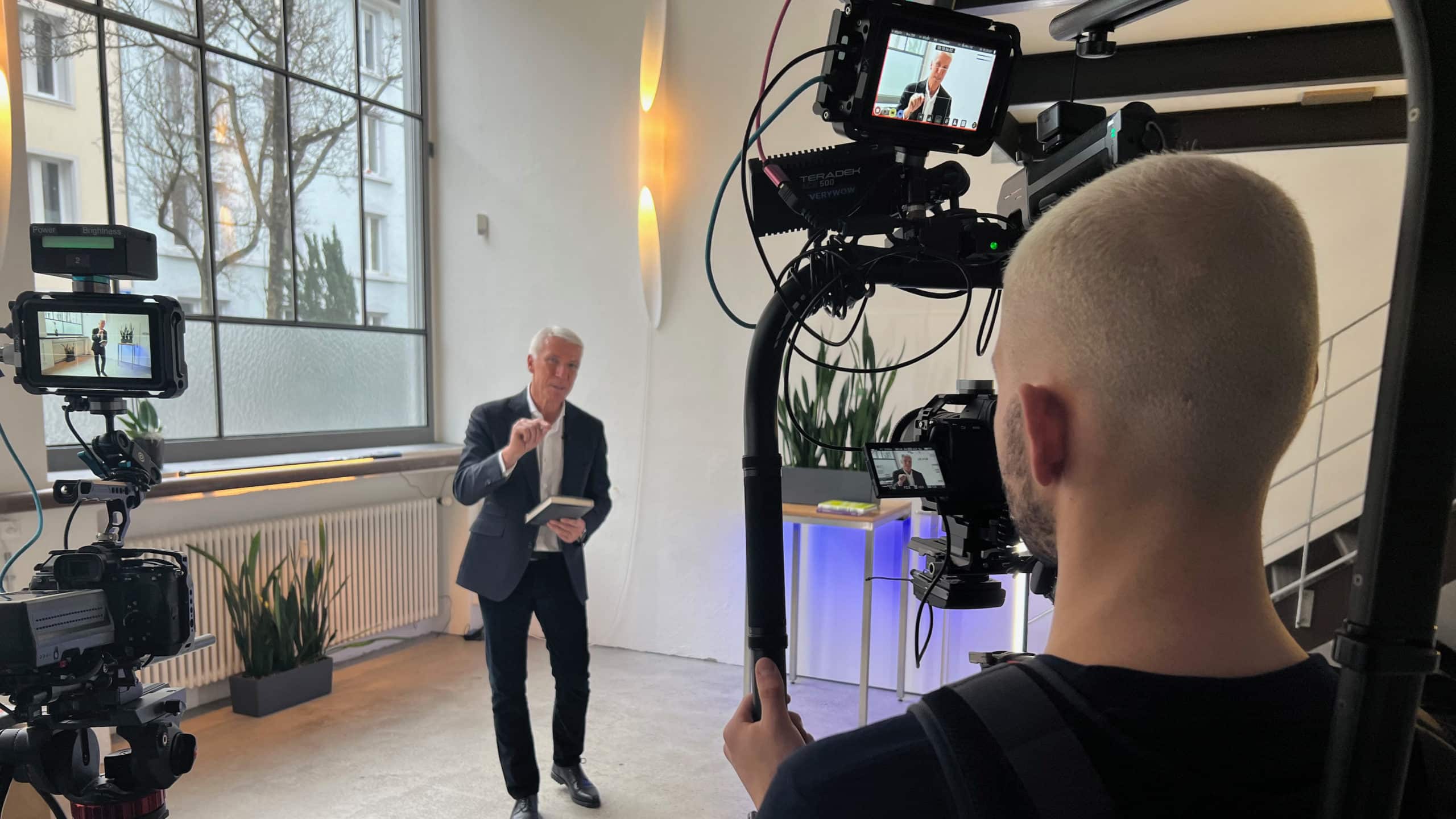
Video production uses professional digital cameras, lenses, lighting, sound equipment, teleprompters when needed, and post-production tools for editing, graphics, and audio. The exact kit depends on the purpose. A leadership interview, a product film, and a social campaign do not need the same setup.
The most useful techniques are the ones that serve comprehension. Clean sound, efficient shot design, sharp interviewing, and disciplined editing usually matter more than gear for its own sake.
Understanding film production
Film production is usually associated with narrative work built for a cinematic viewing experience, whether that ends up in theatres, festivals, broadcast, or streaming. It often involves a longer-form story, a stronger emphasis on authored direction, and a production structure designed to support that ambition.
The term no longer simply means shooting on physical film stock. Many films are produced digitally. What still distinguishes film production is the scale of development, the degree of creative control over image and performance, and the kind of audience attention the final work expects.
Key elements of film production
Film production shares fundamentals with video production: script, direction, camera, sound, editing, and collaboration. The difference is often in how far those elements are developed. Feature and short films typically place greater emphasis on dramatic structure, character arcs, cinematography, production design, and performance direction.
Another key element is development. Financing, casting, scheduling, rehearsals, art direction, and distribution strategy can all shape the production long before a frame is shot.
The process of film production
Film production also moves through pre-production, production, and post-production, but the timeline is often longer and the planning more layered. Development and financing can be substantial phases in their own right. Shooting schedules may involve more locations, more departments, and more detailed creative preparation.
Post-production can be equally extensive, especially when sound design, music, colour finishing, visual effects, festival submissions, or distribution deliverables need to meet high creative and technical standards.
Tools and techniques in film production
Film production may use cinema cameras, specialist lenses, larger lighting setups, dedicated grip equipment, controlled set builds, and more elaborate sound workflows. Some filmmakers still choose physical film stock, but that is now a deliberate creative choice rather than the default distinction.
The techniques are typically built around cinematic consistency: controlled composition, visual continuity, performance coverage, and a post-production process that protects the intended look and emotional rhythm of the work.
Differences between video and film production
Video production and film production share tools and craft, but they usually diverge in intent, process, and expectation.
Technical differences
The technical gap between the two is smaller than it once was because both are now largely digital. The distinction is not simply that one uses video and the other uses film. It is more often about workflow, image control, lensing choices, lighting design, sound capture, and the standards expected in finishing and delivery.
Commercial video production can look highly cinematic. Film production can use the same digital tools as branded content. The difference lies in how those tools are used and what level of precision the project can justify.
Budget and time constraints
Video production often works within tighter budgets and shorter deadlines. That is common when content supports campaigns, internal communication, or fast-moving commercial needs. Teams are often leaner, approval cycles are shorter, and the output may include several versions for different channels.
Film production usually requires more time and budget because the development process is longer, the crew structure is broader, and the creative ambition often depends on greater control over performance, sets, camera, and sound. The cost is not only about equipment. It is about the number of decisions being held to a higher standard.
Audience and distribution differences
Video production is commonly designed for websites, social channels, internal platforms, live events, and commercial distribution. The viewer may watch on a phone, in a meeting, or as part of a buying process. The content has to work in those conditions.
Film production is generally built for a more concentrated viewing experience. The audience is expected to give sustained attention to story, character, and atmosphere. Distribution may involve cinemas, festivals, broadcasters, or streaming platforms with different technical and contractual requirements.
That is why the choice between the two is often strategic. If the goal is communication, explanation, or conversion, video production is usually the better framework. If the goal is long-form narrative cinema, film production is the right one.
Similarities between video and film production
Despite the differences, both disciplines are built on the same creative foundation: visual storytelling with sound, structure, and performance.
Shared production processes
Both video production and film production rely on pre-production, production, and post-production. In both cases, better planning improves the shoot, and better post-production sharpens the final result.
Common tools and techniques
Both fields use cameras, lenses, lighting, sound recording, editing systems, colour workflows, and sound finishing. Interview direction, composition, pacing, and editorial judgement matter in both worlds.
Overlapping skills and roles
Many roles move between both environments. Directors, cinematographers, editors, sound professionals, producers, and production designers often work across video and film, adapting their craft to different timelines, budgets, and audience expectations.
That overlap is useful to remember. Video production and film production are not opposites. They are related disciplines that serve different purposes with many of the same underlying skills.
FAQ
Is film production still shot on physical film?
Sometimes, but not usually. Most film production is now digital, while physical film stock is chosen selectively for creative reasons.
When should a company choose video production instead of film production?
Choose video production when the goal is communication, explanation, sales support, recruitment, training, or campaign content. It is usually the more practical framework for business use.
Can commercial video production still look cinematic?
Yes. Cinematic quality comes from creative choices, lighting, camera work, sound, and post-production, not from the label attached to the project.
Why does film production often take longer?
Film production usually involves more development, more departments, and a longer finishing process. The workflow is often built for deeper creative control and longer-form storytelling.
Do the same crew roles exist in both fields?
Many do. Directors, cinematographers, editors, sound teams, and producers work in both areas, although the size of the crew and the degree of specialisation often differ.