Virtual employee events only work when people feel included, not merely invited. Engagement comes from structure, pace, and relevance far more than from adding one more tool or forced activity.
Town halls, all-hands meetings, and other internal virtual events often lose energy because the programme stays one-directional. The ideas below focus on practical ways to make employees more attentive, more visible, and more willing to participate.
Table of Contents
Experienced MC
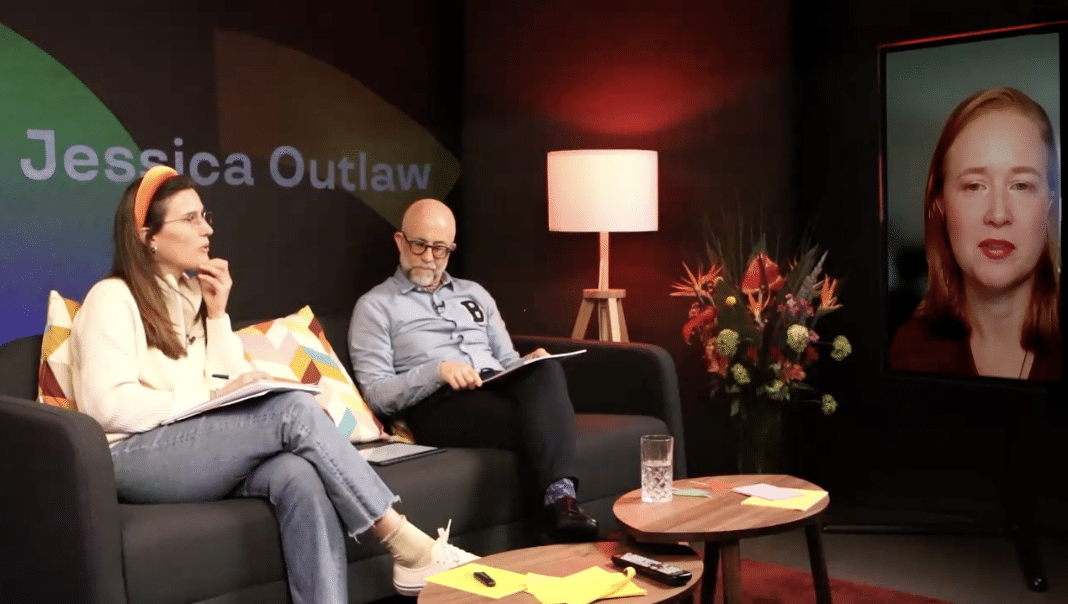
A virtual event needs someone who can hold energy in a room they cannot fully see. An experienced host keeps timing tight, bridges awkward transitions, draws quieter voices in, and gives the event a sense of movement. Without that, even good content can feel static.
Webcam activation as part of the culture
Visible faces change the tone of a virtual event. They create accountability, non-verbal feedback, and a stronger sense that people are attending together rather than watching alone. This only works if the organisation treats camera use as a cultural norm and not as a last-minute instruction.
Mix information, entertainment, and peer-gratitude
Internal events become flat when they are only informative. Employees usually respond better when the event combines useful updates, human moments, and visible appreciation for the work of others. That mix gives people more than one reason to stay attentive.
Encourage non-verbal interactions
Not everyone wants to speak live. Reactions, chat comments, simple prompts, and visible signals such as laughter or agreement still matter. They help speakers read the room and help participants feel that their presence counts even when they are not on mic.
Use interviews instead of presentations
Interviews are often more watchable than slide-heavy presentations because they sound less rehearsed and create natural variation. They also allow leaders and experts to explain complex topics in a way that feels closer to a conversation than to a broadcast memo.
Use polls and surveys
Polls are useful when they support the programme instead of interrupting it. They can reveal opinions, test assumptions, or make employees commit to a position before the answer is discussed. That creates attention because people want to see how others responded.
Ask employees to share personal insights
Short contributions from employees make virtual events feel less centralised and more real. A local perspective, a project lesson, or a brief look into a team culture can build connection across regions and functions much better than another management monologue.
Behind the team
Many employees are interested in what other teams actually do, where current pressure sits, and how decisions are made. A short, well-prepared segment from one team can create recognition, clarify dependencies, and make the company feel less abstract.
Learning from experts
External or internal experts can give virtual events substance when they are tightly integrated into the theme of the event. The strongest contributions are usually specific and practical rather than broad motivational talks. Employees should leave knowing something new, not simply having listened.
You need an event engagement strategy
Engagement does not happen because a platform has features. It happens because the event has rhythm, clear segments, useful content, and moments where employees can see themselves in the programme. If the same format repeats every time, fatigue arrives quickly.
A strong engagement strategy varies the format, respects people’s time, and treats participation as part of the design rather than as an emergency fix halfway through the event.
FAQ
What keeps employees engaged in virtual events?
Usually a mix of relevance, pace, visible participation, and moderation. People stay when the event feels designed for them rather than delivered at them.
Are games necessary for virtual employee engagement?
No. They can help in the right context, but they are not a substitute for a strong format. Useful content and good hosting usually matter more.
Should senior leaders appear in interview format?
Often yes. Interviews usually sound more direct and more human than long presentation segments, especially in remote formats.
How often should the event format change?
Often enough that people do not feel they are attending the same meeting every quarter. Small structural changes can already make a large difference.