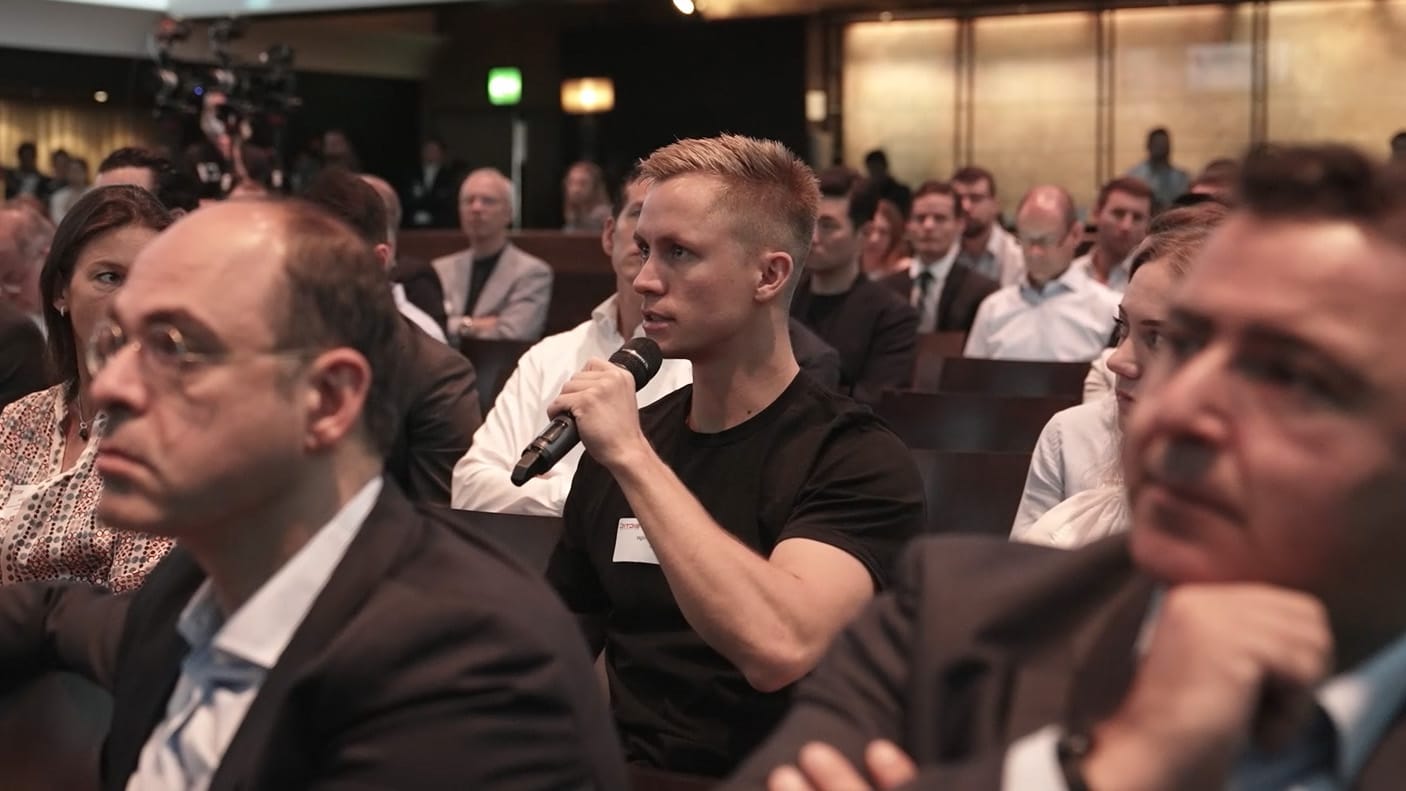
Conference Q&A sessions often fail for predictable reasons. The format gives too much room to long self-promotional interventions and too little structure for useful questions.
That is not a reason to remove questions altogether. It is a reason to design the format more carefully. A few practical changes can make Q&A feel fairer for the audience, safer for speakers, and more useful for everyone in the room.
Table of Contents
Adopt a central platform for questions
A shared question tool changes the quality of Q&A immediately. It lets organisers collect questions before and during the session, group similar points, and surface the issues the audience actually cares about.
Upvoting also introduces basic editorial discipline. Rambling contributions tend to lose momentum when people can support concise questions instead.
In writing, we trust
Written questions help with clarity, language accessibility, and pace. They allow speakers and moderators to understand what is being asked before the moment becomes awkward or overly long.
This matters especially in international conference settings, where not everyone shares the same native language or comfort level at a microphone.
Equip the MC
Moderators need more than goodwill. They need a clear mandate for when to cut, reformulate, redirect, or end an unhelpful intervention. Without that support, even experienced MCs may hesitate in front of the room.
A short briefing document, sample phrases, and a defined escalation path can make a major difference, especially for newer moderators.
Make Q&A optional
Not every session needs live Q&A. Some speakers are better in a moderated interview. Some topics benefit more from written follow-up. Some formats simply run better when the audience interaction happens in breakout discussions afterwards.
Treating Q&A as optional gives organisers more freedom to design for usefulness instead of habit.
FAQ
Why do conference Q&A sessions go off track so often?
Because the format often lacks filtering, moderation rules, and time discipline.
Are written questions always better than spoken ones?
Not always, but they are often clearer, easier to moderate, and fairer in multilingual settings.
What should an MC be briefed on before Q&A?
How to shorten questions, stop self-promotion, protect the speaker, and keep the format on time.
When is it sensible to skip live Q&A entirely?
When the topic is highly sensitive, the schedule is tight, or another interaction format would create more useful discussion.
Can a question tool replace good moderation?
No. It helps structure the input, but the MC still decides what happens in the room.